logo
منزل أخبار

Four Methods to Select Cable Cross-Sectional Area

الصين Shanghai Shenghua Cable (Group) Co., Ltd. الشهادات
المورد لطيفة، والاستجابة والسرعة، ووقت التسليم السريع، منتجات ذات جودة عالية. أنا محظوظ لتجد لك!

—— جون حداد

لقد عملنا معا لمدة 5 سنوات ، هم مورد جيد و freinds جيد ، شرف لنا للعمل معهم.

—— محمد الرباعي

أنا مسرور جدا مع خدمة هذه الشركة، وأعتقد أن أعمالهم سوف يكون أفضل وأفضل.

—— دانيال

يستحق العرض التقديمي والمهني الذي قدمتموه لنا ترحيبًا حارًا. يجب أن يكون Shenghua مستقبل أكثر إشراقا.

—— رينديل بروستر

قراءة المزيد ... الصفحة الرئيسية> معلومات الاتصال معلومات الاتصال معلومات تسجيل الدخول معلومات الاتصال معلومات الاتصال معلومات الاتصال معلومات الاتصال معلومات أخرى

—— KHADBAATAR

ابن دردش الآن
الشركة أخبار
Four Methods to Select Cable Cross-Sectional Area
آخر أخبار الشركة Four Methods to Select Cable Cross-Sectional Area
Four Methods to Select Cable Cross-Sectional Area

Practical Guide by Shenghua Cable

Choosing the right cable cross-sectional area is critical for electrical safety, efficiency, and cost-effectiveness. While many engineers rely on experience or simplified formulas, a scientific approach ensures long-term reliability and optimal performance. Drawing on decades of experience, Shenghua Cable (Shanghai Shenghua Cable Technology Group Co., Ltd.) presents four practical methods to determine the correct cable cross-section for different applications.

Discover Shenghua Cable’s full product range here:https://www.shanpowercable.com/


1. Based on Long-Term Allowable Current Carrying Capacity

The most straightforward method is to ensure that a cable does not exceed its long-term operating temperature under normal load.

  • PVC-insulated cable: 70°C

  • XLPE-insulated cable: 90°C

Example:

  • Transformer capacity: 2500 kVA

  • Supply voltage: 10 kV

  • Cable type: XLPE, laid in cable bridge

Step 1: Calculate rated current

I=250010.5*1.732≈137AI = frac{2500}{10.5 times 1.732} approx 137A

Step 2: Check cable manual

  • YJV-8.7/10KV-3X25 → 120A

  • YJV-8.7/10KV-3X35 → 140A

Step 3: Select cable

  • YJV-8.7/10KV-3X35 satisfies 137A

Note: This method does not account for voltage drop or short-circuit thermal stability.


2. Based on Economic Current Density

This method balances material cost and power loss. Smaller cables reduce investment but increase losses; larger cables reduce losses but increase cost. The optimal size is determined using the economic current density (A/mm²) based on equipment operation hours.

Example:

  • Equipment rated current: 150A

  • Annual operating hours: 8000 hours

  • Economic current density: 1.75 A/mm²

S=Ieconomic density=1501.75≈85.7 mm²S = frac{I}{text{economic density}} = frac{150}{1.75} approx 85.7 text{ mm²}

Step 2: Select nearest standard size → 95 mm²

This method ensures both safety and cost-effectiveness.


3. Based on Voltage Drop

For long cable runs, voltage drop becomes significant and may affect equipment operation. The allowable drop is often 7% for a 400V line.

Voltage drop formula:

S=I⋅ρ⋅LΔUS = frac{I cdot rho cdot L}{Delta U}

  • III = rated current

  • ρrhoρ = conductor resistivity

  • LLL = cable length

  • ΔUDelta UΔU = allowable voltage drop

Example:

  • Device voltage: 380V

  • Rated current: 150A

  • Copper cable resistivity: 0.0175 Ω·mm²/m

  • Cable length: 600 m

  • Allowable voltage drop: 26.6V

S=150*0.0175*60026.6≈59.2 mm²S = frac{150 times 0.0175 times 600}{26.6} approx 59.2 text{ mm²}

Step 2: Select nearest standard size → 70 mm²

This ensures voltage stability along long cable runs.


4. Based on Thermal Stability (Short-Circuit Current)

For medium- and high-voltage cables (≥6 kV), cross-section selection must account for short-circuit thermal stability.

Formula:

Smin=IdtiCS_{text{min}} = frac{I_d sqrt{t_i}}{C}

  • IdI_dId = short-circuit current

  • tit_iti = breaker interruption time

  • CCC = cable thermal coefficient (typically 80)

Example:

  • Short-circuit current: 18 kA

  • Thermal coefficient: 80

  • Breaker time: 0.25 s

Smin=18000*0.2580≈112.5 mm²S_{text{min}} = frac{18000 times sqrt{0.25}}{80} approx 112.5 text{ mm²}

Step 2: Select nearest standard size → 120 mm²

Even if the rated current is small, the cable must withstand short-circuit stress.


Why Shenghua Cable

By combining scientific selection methods with quality manufacturing, Shenghua Cable ensures:

  • Accurate cross-sectional sizing for safety and efficiency

  • Reliable thermal and electrical performance

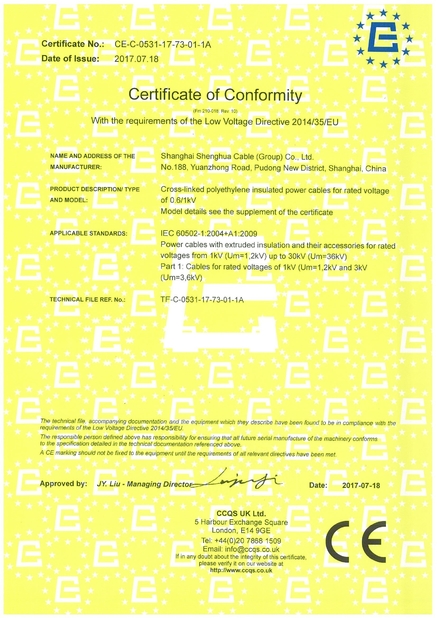
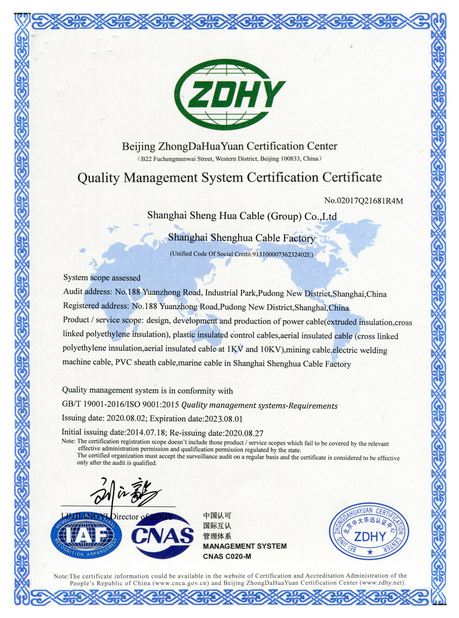
  • Compliance with international standards and certifications

  • Long-term durability in industrial and power distribution systems

Shenghua Cable offers full guidance and technical support for project-specific cable sizing.

Explore our product portfolio:https://www.shanpowercable.com/


Conclusion

Selecting the correct cable cross-sectional area is more than following experience. By considering long-term current capacity, economic density, voltage drop, and short-circuit thermal stability, engineers can ensure safe, reliable, and cost-effective installations.

Shenghua Cable combines technical expertise with premium-quality materials to provide solutions that stand the test of time.

حانة وقت : 2026-04-10 10:56:38 >> أخبار قائمة ميلان إلى جانب
تفاصيل الاتصال
Shanghai Shenghua Cable (Group) Co., Ltd.

اتصل شخص: Ms. Mayling Zhao

الهاتف :: 86-21-68172999

الفاكس: 86-21-58179888

إرسال استفسارك مباشرة لنا (0 / 3000)